
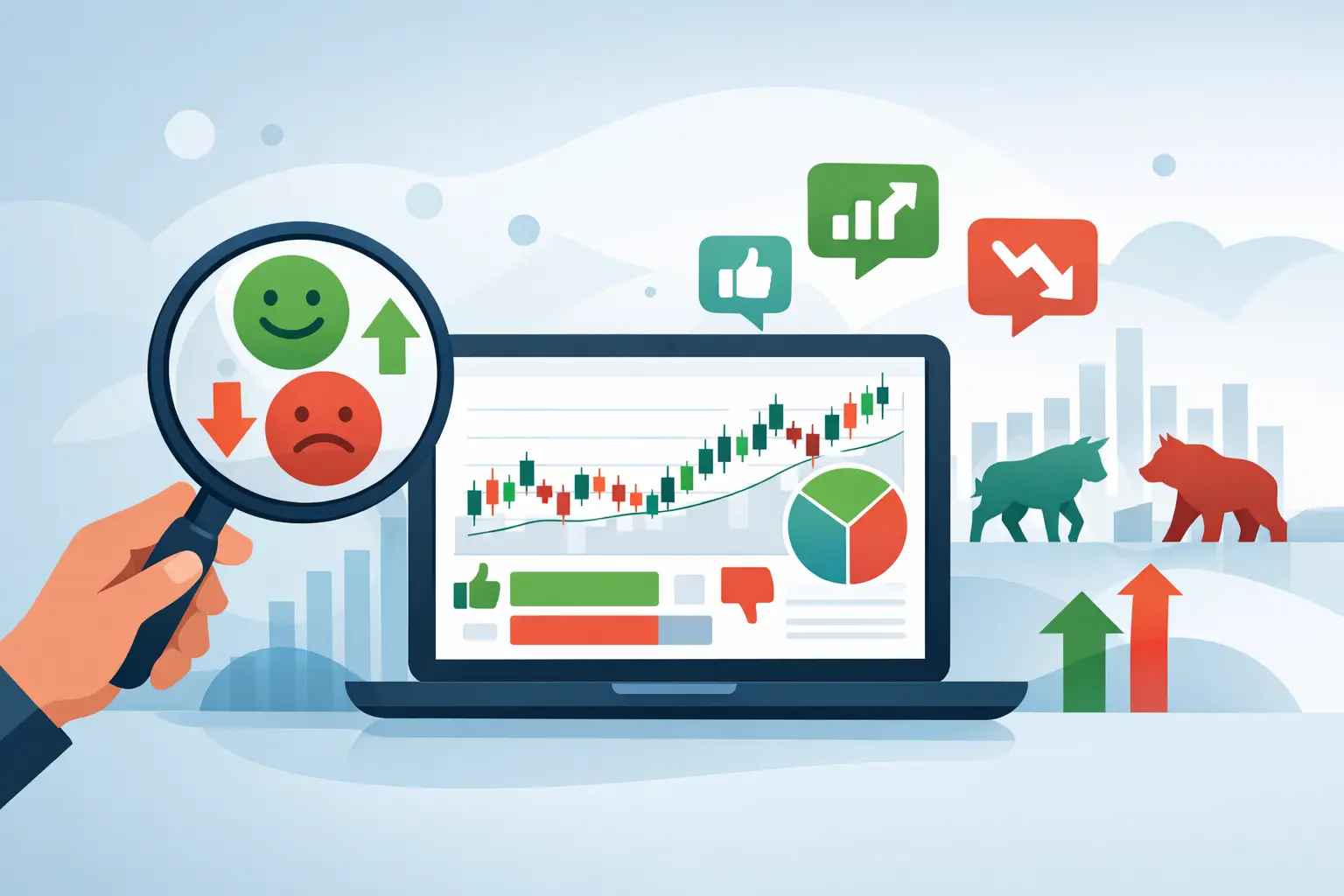
Most traders do not lose the plot because they miss a chart pattern. They lose it because the story around a ticker changes before their process catches up. A stock sentiment screener exists for that gap. It gives you a way to track where attention is building, whether that attention is constructive or hostile, and how fast the narrative is changing across news and social channels.
That matters because price is not the first place a move starts. Often, the first clue is a sudden increase in discussion, a sharp change in tone, or a new theme attaching itself to a stock. If you are scanning thousands of names, that shift is easy to miss manually. A sentiment screener compresses that work into something tradable from a research standpoint - not by replacing your process, but by showing you where to focus it.
What a stock sentiment screener actually does
At a basic level, a stock sentiment screener ranks or filters tickers based on market attention and the tone of coverage around them. The better versions go further. They do not just count mentions. They separate verified news from social chatter, measure velocity, and surface whether the current narrative is strengthening, fading, or turning.
That distinction is where most of the value sits. Raw mention volume can be misleading. A ticker can trend because of recycled headlines, low-quality social spam, or a brief burst of meme activity with no follow-through. A useful screener treats attention as a signal source that needs context. It asks: who is talking, how fast is the discussion accelerating, what is the prevailing tone, and is there evidence behind the move in attention?
For active traders, this is less about opinion and more about workflow. You are trying to reduce search time. Instead of reading widely and hoping the right names surface, you begin with a list of tickers that already show unusual narrative activity.
Why sentiment matters before price confirms it
Markets react to information, but they also react to how that information spreads. A company update can land quietly, or it can trigger a fast chain of media pickup, social amplification, and trader attention. The price response may lag that distribution cycle, especially in names where volume has not fully expanded yet.
This is why sentiment data can be useful even if you are primarily technical. You are not abandoning price action. You are getting an earlier read on the conditions that often lead to it. If a ticker shows rising verified news momentum, increasing social discussion, and a clear shift in narrative tone, that can tell you where pressure is building before it becomes obvious on a broad scan.
Of course, sentiment is not clean. It is noisy, reflexive, and sometimes wrong. Panic can create bearish extremes that reverse quickly. Hype can create bullish readings that collapse on weak follow-through. The point is not to treat sentiment as truth. The point is to use it as an early warning system for attention.
What separates a useful screener from a noisy one
Not all sentiment data deserves screen space. If a tool only shows aggregate buzz, it can overwhelm you with the exact problem it claims to solve. A serious stock sentiment screener needs to help you filter, rank, and verify.
First, source quality matters. Verified news and social media should not be weighted the same way. News can move institutions and broader market participants. Social chatter can reveal early retail attention and momentum pockets. Both matter, but they serve different functions. Combining them into one undifferentiated score often reduces clarity instead of improving it.
Second, recency matters. Yesterday's sentiment spike may be irrelevant if discussion has already cooled. Good screening depends on time windows, acceleration, and persistence. You want to know whether a narrative is fresh, whether it is intensifying, and whether it is sustaining across multiple intervals.
Third, evidence matters. If a screener flags a stock, you should be able to inspect the underlying drivers quickly. What headlines changed the tone? What discussions pushed mention velocity higher? What themes are now attached to the ticker that were absent a few hours ago? Without that evidence layer, you are forced back into manual research.
This is where trader-focused platforms stand apart. Sentimentick, for example, emphasizes separate weighting for verified news and social sentiment while surfacing ticker-level evidence feeds. That structure supports a faster decision loop because the screen result and the reason behind it live in the same workflow.
How traders use sentiment screening in practice
The strongest use case is prioritization. A screener helps you identify which names deserve chart review, news validation, and watchlist placement right now. That is a better use of sentiment than treating it like a stand-alone signal.
For momentum-focused traders, sentiment screening can reveal where attention is arriving before volume becomes crowded. A stock with rising news momentum and expanding social interest may be moving into a higher-visibility phase. That does not guarantee continuation, but it tells you the name is entering a different information regime.
For swing traders, the value is often in narrative durability. A one-hour burst of chatter is less interesting than a multi-day trend in positive or negative coverage, especially when new themes keep reinforcing the same directional story. If the narrative is evolving, not repeating, the move may have more depth.
For technically fluent traders, sentiment adds context to familiar setups. A breakout with no narrative support is one thing. A breakout with growing attention, favorable news flow, and strengthening sentiment is another. The chart may look similar at first glance, but the participation backdrop is different.
The trade-offs traders should respect
Sentiment is fast, but speed can create false positives. Names with thin floats, viral communities, or headline sensitivity can produce dramatic sentiment swings that do not hold. If your screener has no way to distinguish quality from noise, you can burn time chasing activity that never matures.
There is also a timing problem. Early sentiment can be useful, but too early is still early. A stock can attract interest for hours or days before price responds in a meaningful way. If your process depends on immediate confirmation, sentiment alone may feel frustrating. That does not make it useless. It just means it works best as part of a layered workflow.
Another trade-off is interpretation. A spike in negative sentiment is not automatically bearish in practical terms. Sometimes it reflects capitulation, controversy, or a headline that gets absorbed faster than expected. Positive sentiment is not automatically constructive either. Euphoric coverage late in a move can mark exhaustion rather than opportunity. Context is doing the heavy lifting here.
What to look for in a stock sentiment screener
If you are evaluating tools, focus on whether the screener helps you move from detection to analysis without friction. Speed matters, but so does structure.
A strong setup typically includes real-time or near-real-time updates, separate views for news and social activity, ticker-level sentiment history, narrative or theme tracking, and alerting tied to unusual changes rather than static thresholds. It also helps if the platform shows how a stock's current reading compares with its own baseline. Unusual attention is more informative than raw attention.
For developers and quantitative users, access matters in a different way. Screeners are useful visually, but API delivery can make the data easier to incorporate into custom dashboards and research pipelines. The key is consistency. Sentiment data only becomes usable in a model if the definitions, source handling, and refresh logic are stable.
Where sentiment screening fits in a serious workflow
The cleanest way to use a sentiment screener is at the front of the process. Let it narrow the field. Then validate with price structure, liquidity, headline review, and your own criteria. That approach keeps sentiment in its best role - surfacing emerging attention and narrative shifts before they become obvious to everyone else.
This is especially useful on busy market days when too many stocks have something going on at once. A screener does not remove uncertainty, but it can cut through clutter. Instead of reacting to the loudest ticker on your feed, you can focus on the names where attention is changing in a measurable way and where the evidence is visible.
Markets move on information, but they also move on attention. A strong stock sentiment screener helps you monitor both at the same time. Used well, it does not tell you what to think. It tells you where the market may be starting to think differently.